




Society’s change is largely through digital communication, and technology’s interaction is also evolving. Technology, in the past, was only used to provide us with information. Now, we interact with technology, and very often this will make us reflect on our usage of it. But the rapidly changing and complicated digital world may sometimes hinder the recognition of the real advantages of technology.
Technologies need to be integrated into our lives if we are to enjoy their benefits. Furthermore, not only these problems but also the fear and confusion regarding technology are common among users. This is caused by the complex layers of the digital world, for example, the development of apps and trying to use them without knowing their purposes. However, as more people become creators in this digital world, they realize and learn from the information and conversations about them. They also find ways to collaborate with technology effectively; thus, it can beautify their surroundings rather than being a dead weight.
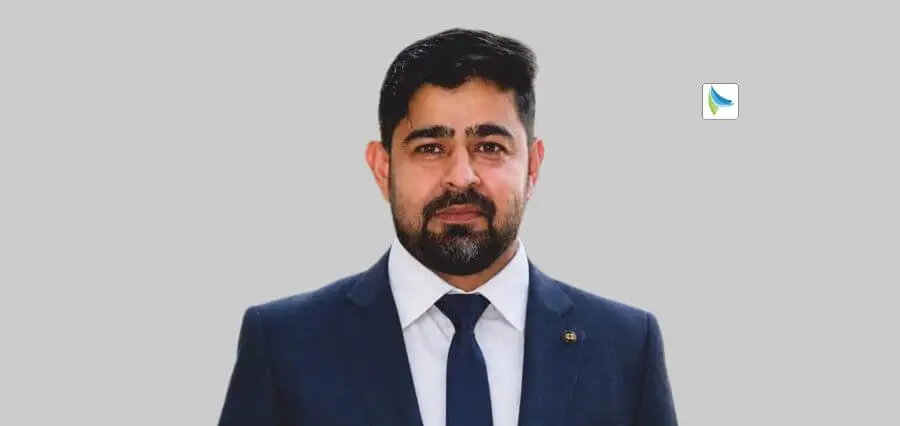
This profound challenge, translating immense organizational complexity into seamless human experience, is the defining work of an elite group of design leaders. They recognize that design is not an aesthetic concern; it is a strategic instrument for accountability and business success. Especially within highly regulated sectors, such as financial services, where the stakes are high and legacy systems loom large, the ability to instil simplicity and integrity becomes the highest form of innovation. This narrative centers on one such leader: Ravi Palwe, a Senior Manager- Experience Design at Capgemini. He is a seasoned product designer whose career spans more than two decades, dedicated to building design cultures and systems that produce clear, measurable outcomes. He is actively shaping the ethical, inclusive, and accountable future of experience design, positioning usability as the essential strategy for clarity in the age of AI. His story is all about intentionality, where every choice, from the microcopy on a button to the structure of his entire team, is designed to eliminate friction and elevate purpose.
The Genesis of Purpose: Leading with the Question ‘Why?’
Ravi’s entry into the domain of product design was catalyzed not by a grand plan, but by a simple, fundamental sense of frustration. He observed a process, a necessary financial task, that required an unacceptable series of eight clicks and three separate screens. That complexity, that moment of user hesitation, became his personal professional compass. He became the voice that consistently asked: “Why is this not easier?” This relentless, foundational curiosity pulled him toward user-centered design, instilling a profound commitment to the principle that when designers remove friction and speak plainly, every key performance indicator, from task completion rate to overall user satisfaction, improves dramatically.
Ravi’s pursuit of excellence led him to formalize his knowledge by earning the highly respected HFI-Certified Usability Analyst™ (CUA) credential from Human Factors International. This certification reinforced his core belief that usability is a strategic, measurable asset that directly impacts the bottom line. His academic foundation is robust and diverse, deliberately focusing on the intersection of technical understanding and design strategy. Ravi completed his Master’s in Information Technology from AAIDU, Allahabad, India, in 2004, providing him with a strong technological base. Furthermore, his commitment to continuous learning is evident in his corporate training at UT Austin and his specialized studies, including Design Thinking at IDC IIT Mumbai and UX Management: Strategy and Tactics from the Interaction Design Foundation (IDF).
He began his career as an individual contributor, systematically advancing his expertise until he was leading complex, multi-disciplinary design teams. His extensive experience is anchored in navigating regulated environments, notably within financial services. In these high-stakes, high-complexity sectors, he has taken ownership of end-to-end initiatives, requiring him to partner seamlessly with product managers, engineering leads, and data scientists. This rigorous path taught him the non-negotiable value of testing early, communicating decisions transparently, and ensuring that any critique remains constructively centered on improving the work itself, not the people. His central professional objective is unwavering: he strives to make complex systems feel intuitive, simple, and inherently accountable to the user.
Architecting Success: A Portfolio of Measurable Outcomes
Ravi’s leadership is defined by his insistence on measurable, outcomes-driven design. He consistently focuses the team’s energy on the results of their work, moving beyond merely delivering outputs like mock-ups or prototypes.
The Financial Platform Transformation
One of Ravi’s most significant achievements involves a financial platform where he led a flow redesign rooted entirely in usability principles. By focusing on fundamental human factors, he produced a massive performance improvement: a remarkable 40% reduction in the average time required to complete a critical user task. He achieved this by implementing principles such as visible system status (clearly showing the user where he is and what is happening), recognition over recall (making options visible instead of forcing the user to remember), and contextual feedback.
He further drove product success by leading the redesign of a mobile onboarding experience, which directly resulted in a significant increase in adoption rates. Beyond the customer-facing products, he was instrumental in shipping a crucial internal financial application. This application was designed to act as an intelligence layer, transforming scattered client data into focused, actionable insights. By doing this, he enabled client-facing teams to concentrate their conversations on the most relevant information, dramatically reducing guesswork and increasing their consultative efficiency. The core principle at play here is leveraging design to make data intelligent, not just available.
The Mandate of Responsibility: Founding the SOLAR Framework
Perhaps the clearest declaration of his professional ethos is his creation of the SOLAR Framework. This is not just another design system; it is an open-source, planet-first initiative that serves as a powerful statement that reflects the belief that sustainability is a team sport.
SOLAR integrates usability and performance metrics directly with ethical design patterns, actively working to reduce digital bloat by advocating for efficient code, minimal resources, and high performance. This framework embodies his conviction that design must be mindful of its environmental and social impact. For Ravi, a successful digital product is one that not only functions beautifully for the user but also adheres to a higher standard of sustainability. It is a philosophy that mandates: less guesswork, fewer detours, and more meaningful, sustainable results.
Ravi has also launched The One—a powerful new app designed to simplify the way people connect, engage, and take action in the digital world. Available at https://theone.ravipalwe.com/, the app blends smart functionality with an intuitive user experience, making it easy for users to explore features, stay aligned with their goals, and access value instantly.
With a clear focus on convenience, speed, and impact, The One is positioned as a next-gen platform built for today’s fast-moving audience.
The Conductor of Culture: Leadership through Clarity and Systems
Ravi views his primary role as a leader not just as a manager of people, but as the architect of the creative environment. He understands that designers deliver their best, most resilient work when they operate within a framework of clear processes, right-sized tools, and a culture of constructive critique that elevates ideas and never targets the individual.
His leadership is fundamentally built on a coaching-first model. He believes in delegating effectively by granting context, not chores. This intentional approach empowers team members to grow, take true ownership of their contributions, and subsequently frees up his own time to tackle the most complex organizational challenges, such as resolving cultural roadblocks or defining ambiguous strategic priorities.
He is a fierce champion of systemization and reuse. He actively advanced the use of design tokens, components, and naming conventions, transforming them into a force multiplier for the organization. By centralizing these elements, he accelerates the pace of delivery while rigorously maintaining quality and consistency across all products. This focus on systemic quality extends to his approach to research. He pioneered the establishment of remote-friendly testing methods and inclusive stakeholder observation practices, ensuring that feedback is gathered faster, from a broader participant pool, and across diverse time zones, fostering a more inclusive design practice.
The Strategic Advantage
Ravi then leveraged the remote context to accelerate progress. Remote studies provided access to a wider, more inclusive participant pool, drastically speeding up the research cycle. The necessity of clear remote communication stripped away ambiguity: the team was forced to use crisper language and create simpler, clearer flows, which directly resulted in higher task success rates for the end-user. The distributed environment necessitated a formal design system acceleration, leading to a tighter adoption of tokens and components. This transformation wasn’t just survival; the team emerged faster, clearer, and more inclusive. Even upon the return to the office, they consciously retained the most effective habits: remote-friendly research, systemized reuse, and async-first collaboration methods.
Industry Recognition and Thought Leadership
Ravi’s dedication to design excellence has been consistently recognized by the industry, solidifying his status as a thought leader in the UX and fintech space.
Awards & Recognition
- 2025 Global Recognition Award – Financial UX Design: A significant achievement announced on July 11, 2025, which highlights his innovative work in the financial technology sector.
- Finance & Fintech Judging Panel (2025) for Global Recognition Awards: This appointment serves as a notable recognition of his expertise and standing within the industry.
- IAF “Indian Awards / Achievers” profile/feature: He has been featured in this profile/spotlight, acknowledging his substantial career accomplishments.
Professional Credentials
- HFI–Certified Usability Analyst (CUA): This foundational credential remains central to his practice.
Published Articles
His current writing focuses on the urgent topics of AI and digital ethics, providing practical strategies for the future of experience design:
- “The Role of User Experience Design in Advancing Digital Sustainability”
- “Designing the Invisible: UX strategies for agentive AI in 2025 and beyond”
- “Redefining usability in the age of generative AI: Towards a new evaluation paradigm”
- “Analyzing the Core Principles and Methodologies of Ethnographic UX Research in Large Corporate Contexts”
The UX Playbook: A Mantra for Intentional Leadership
Ravi offers a precise and actionable playbook for aspiring leaders, rooted in his two decades of practical experience. His advice is a clear directive to prioritize people and clarity above all else:
- Define Success by User Outcomes: He insists that design must begin with measurable metrics- time saved, errors reduced, confidence gained. The user’s success is the only scorecard that truly matters.
- Commit to Discovery: He advises building a continuous research habit, moving past one-off events. He urges leaders to talk to customers regularly and ensure those learnings guide every decision.
- Embrace the One-Page Rule: To cut through ambiguity, he recommends writing the plan on a single page, clearly detailing the why and what before jumping into execution.
- Make Access Standard: Accessibility is not an add-on; he mandates making inclusion the non-negotiable standard from the very first sketch.
- Cultivate a Safe Critique: He teaches that feedback must be safe and specific, focusing entirely on how to improve the work without attacking the person.
- Decide and Move: Leaders must have the discipline to decide on time and then move on, preventing the costly drag of perpetual re-debate.
- Prioritize Async Communication: He champions using asynchronous methods, like short videos and documentation, to share updates, reserving valuable meeting time exclusively for making decisions.
- Lead with Coaching and Context: He advises leaders to coach and delegate with context, empowering their teams to take genuine ownership of outcomes.
- Protect Focus: Leaders must actively protect deep-work time for themselves and their teams, recognizing that true creative work requires uninterrupted thinking.
- Tell the Full Story: He emphasizes that after a product ships, the team must check what changed for the user and tell the before-and-after story, proving the value of their design decisions.
Ravi’s philosophy for sustained, high-quality success is a seamless blend of empathy and rigorous systems: Use simple systems, checklists, and weekly rhythms to cut noise and add clarity. Small, steady wins compounded daily become real success. Ravi is not merely managing digital experiences; he is defining the standard for the next generation of accountable, human-centered technology.