



Finance works best when discipline guides decision-making and systems are built to be trusted. Strong controls create confidence, and confidence enables progress — especially as digital finance continues to evolve.
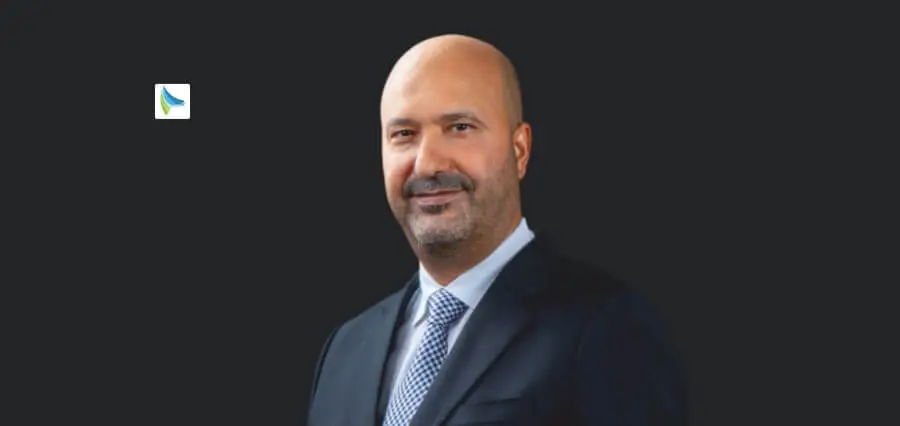
As new financial infrastructure develops, the challenge is no longer just technological advancement, but how to apply robust governance, control, and accountability at scale. Ehsan Masud focuses on building financial frameworks that allow digital platforms to grow responsibly, combining innovation with the discipline expected by regulators, institutions, and stakeholders.
Drawing on experience across global capital markets and regulated digital finance, his approach emphasizes transparency, resilience, and consistency. Rather than viewing regulation as a constraint, he sees it as a foundation for credibility and sustainable growth.
In this interview, Ehsan shares practical perspectives on how the CFO role is evolving, how disciplined treasury and capital management can be applied to digital assets, and why trust remains the most valuable currency in modern financial systems.
Below are the interview highlights:
Could you please brief us about yourself and your motivation to embark on this sector?
I am a CIMA-qualified accountant with over 20 years of experience across global investment banking, treasury management, and, more recently, regulated digital assets and payments. I began my career in London with institutions such as Morgan Stanley, Barclays, HSBC, and Merrill Lynch, building expertise across product and financial control, capital management, and balance sheet optimisation spanning multiple asset classes, including equities, fixed income, commodities, and credit.
I witnessed the rapid acceleration of fintech firsthand during the COVID period, which sparked a strong interest in applying institutional financial discipline to an emerging and fast-evolving ecosystem. Having spent much of my career operating within highly regulated environments, I recognised a clear gap between the potential of blockchain-based finance and the robustness of the financial governance supporting it.
Relocating to Abu Dhabi enabled me to bridge that gap, applying decades of traditional finance experience within one of the world’s most forward-thinking regulatory environments to help build digital financial infrastructure that is both innovative and credible.
What initially drew you toward finance and later into specialised areas such as digital assets and treasury management across global markets?
Early in my career, even as an economics graduate, I worked closely with finance teams based directly on the trading floor. That exposure gave me a front-row view of how fast-paced and high-pressure the environment can be, and how traders make real-time decisions around strategy, risk, and capital allocation.
Working in trading support and financial control roles showed me how P&L is shaped by volatility and market dynamics, and how the strength of control environments directly influences outcomes. This grounding shaped my long-term focus on robust control frameworks and disciplined financial management.
As my career progressed, I gravitated towards capital and balance sheet roles, particularly during periods of significant regulatory change such as the 2008 global financial crisis and the post-Brexit environment. Digital assets became a natural extension of that journey. Rather than viewing them as a standalone asset class, I see them as an evolution of financial infrastructure — one that demands even higher standards of control, transparency, and discipline than traditional markets.
As a CFO leading financial transformation across multiple regions, how do you balance innovation with the need for strict regulatory compliance in digital asset ecosystems?
I have always believed that regulation and innovation are not opposites. In financial services, regulation is often what allows innovation to scale.
Balancing innovation and regulation starts with the mindset that compliance is not a constraint, but an enabler of sustainable growth. My approach has always been to design finance and treasury frameworks that are aligned with regulatory expectations from the outset, rather than reacting to them later.
In practice, this means making compliance, auditability, and reporting part of the core system design from day one.
Innovation then becomes incremental and controlled, rather than disruptive and risky. When finance, compliance, and technology are aligned early, it is possible to move quickly without compromising integrity.
What inspired your early interest in integrating blockchain and digital asset frameworks into traditional treasury operations?
My interest was sparked by seeing how traditional treasury operations can struggle with cross-border payments, multiple currencies, and complex banking arrangements.
Treasury teams have always aimed for greater speed, transparency, and control, and blockchain technology offered a practical way to improve all three through real-time settlement, better visibility, and stronger auditability—all core treasury objectives.
What appealed to me was not replacing banks or
established control frameworks, but strengthening them. I was clear that blockchain would only deliver real value if digital assets were treated with the same discipline and rigour as traditional financial instruments.
Integrating blockchain into treasury operations therefore meant carrying forward essential safeguards such as liquidity management, segregation of funds, and clear audit trails, while applying them within a digital-native environment. The opportunity was to modernise treasury infrastructure in a way that enhances efficiency without compromising trust.
In your experience managing multi-billion-dollar balance sheets, what key principles guide your capital allocation and optimisation strategies?
The first principle is alignment. Capital allocation must be tightly aligned to strategic objectives, regulatory constraints, and defined risk appetite. Whether managing a multi-billion-dollar investment banking balance sheet or a fast-growing fintech platform, the fundamentals remain the same.
The second principle is resilience. Maintaining appropriate liquidity buffers and diversified funding enables organisations to withstand market stress. Throughout my investment banking career, we ran ICAAP stress scenarios to assess capital adequacy across a range of macroeconomic risk factors, alongside regulatory solvent wind-down exercises to ensure the balance sheet could be unwound in an orderly manner under severe conditions.
Finally, capital efficiency must be managed continuously. We materially improved ROE not by cost cutting alone, but by optimising risk-weighted assets and leverage—ensuring capital was consistently deployed toward the strongest risk-adjusted returns. In digital asset businesses, where volatility is higher and regulatory capital frameworks continue to evolve, this discipline becomes even more critical.
How do you see the role of CFOs evolving as digital finance and tokenised assets reshape global capital markets?
The CFO role is evolving from traditional financial oversight into real-time strategic leadership. As digital finance and tokenised assets gain traction, CFOs must understand technology deeply enough to challenge assumptions while maintaining clear accountability for financial integrity.
CFOs are increasingly becoming architects of governance rather than simply reporters of outcomes. Future CFOs must be fluent across technology, regulation, and capital markets, acting as effective translators between regulators, engineers, and commercial teams. Those who can bridge these worlds will play a defining role in shaping the responsible development of digital capital markets.
Could you share an example of a major challenge you faced when implementing a digital treasury solution, and how your team overcame it?
One of the most significant challenges was building a treasury platform capable of managing simultaneous fiat and crypto flows across multiple jurisdictions while remaining audit-ready. Unlike traditional banking systems, blockchain transactions are irreversible, leaving little margin for error.
We addressed this by redesigning treasury processes from first principles, introducing layered approvals, real-time reconciliation, and strict segregation between client and proprietary assets. By working closely with technology and compliance teams, we ensured every transaction could be independently verified and reported. The result was a robust digital treasury platform that passed multiple annual audits without exception and scaled confidently as transaction volumes grew.
You have worked through diverse financial jurisdictions; what factors do you consider most critical when aligning IFRS or GAAP standards with local GCC compliance frameworks?
The key is understanding regulatory intent, not just technical rules. IFRS and GAAP provide global consistency, but local regulators often impose additional requirements that reflect regional risk priorities, such as client protection or liquidity safeguards.
In the GCC, particularly in ADGM and DIFC, regulators place a strong emphasis on transparency, substance, and governance. Aligning global standards with local frameworks requires early engagement, clear documentation, and robust internal controls. I have found that proactive dialogue with regulators, supported by strong financial modelling and audit trails, significantly reduces friction and builds long-term trust.
With cryptocurrencies and digital assets becoming mainstream, how do you evaluate risk and performance differently compared to traditional investment instruments?
Digital assets introduce new risks, particularly around custody, technology, and market structure. Traditional metrics such as volatility and liquidity still apply, but they need to be complemented by robust assessments of operational and counterparty risk.
Performance evaluation also differs. Rather than focusing solely on price appreciation, I place greater emphasis on resilience, transparency, and integration within the broader financial ecosystem. Stablecoins, for example, should be assessed based on reserve quality, governance, and redemption mechanics. Applying institutional risk frameworks to digital assets helps distinguish sustainable financial innovation from short-term speculation.
How do you foster collaboration between technology, compliance, and finance teams while delivering real-time insights through digital platforms?
Collaboration starts with shared objectives. I ensure that finance, technology, and compliance teams are aligned around outcomes such as accuracy, scalability, and regulatory readiness. This often means actively involving finance in technology discussions and engaging compliance teams early in system design.
Clear communication is essential. Translating financial requirements into technical specifications—and vice versa—avoids misunderstandings later. By establishing clear data governance and shared definitions, teams can deliver real-time insights without compromising control. In my experience, this integrated approach significantly accelerates execution.
Looking at the next few years, what breakthroughs in payment infrastructure or blockchain integration excite you the most?
I am particularly excited by the growing alignment between regulated payment infrastructure and blockchain-based settlement, especially where innovation is supported by clear government and regulatory backing. Initiatives such as tokenised deposits, regulated stablecoins, and on-chain settlement within licensed environments have the potential to materially transform cross-border payments. The UAE’s progress on the Digital Dirham is a strong example of this, demonstrating how central bank leadership and regulatory clarity can drive adoption while maintaining trust and stability.
From a CFO perspective, these developments can significantly reduce settlement risk, improve liquidity efficiency, and enhance transparency across payment flows.
The critical factor is that innovation is taking place within clear, well-defined regulatory frameworks and with explicit government support. That combination — technological progress reinforced by sovereign credibility—is what gives institutions the confidence to scale and integrate these solutions into core financial infrastructure.
How do you measure the success of finance-driven innovation—is it through ROI metrics, operational efficiency, or long-term value creation?
Success must be assessed across all three dimensions. ROI provides a necessary financial benchmark, but it is not sufficient on its own. Operational efficiency—such as reduced reconciliation time or improved reporting accuracy—often delivers compounding benefits over time.
Ultimately, long-term growth creation is the most important measure. Innovations that strengthen governance, improve resilience, and enhance stakeholder confidence create lasting advantages. As a CFO, my role is to ensure that innovation contributes to sustainable growth rather than short-term gains.
What advice would you give to emerging finance leaders aiming to build resilience and foresight in a rapidly digitising financial landscape?
My advice would be to build strong fundamentals first. A deep understanding of accounting, risk, and capital management remains essential, regardless of technological change. At the same time, finance leaders should stay curious and engage with emerging technologies early.
Resilience comes from adaptability and integrity. Those who can combine technical competence with sound judgment and responsible leadership will thrive. Finally, I would encourage emerging leaders to view regulation as a partner in innovation. Working effectively within regulatory frameworks is what ultimately enables scale and long-term sustainability.