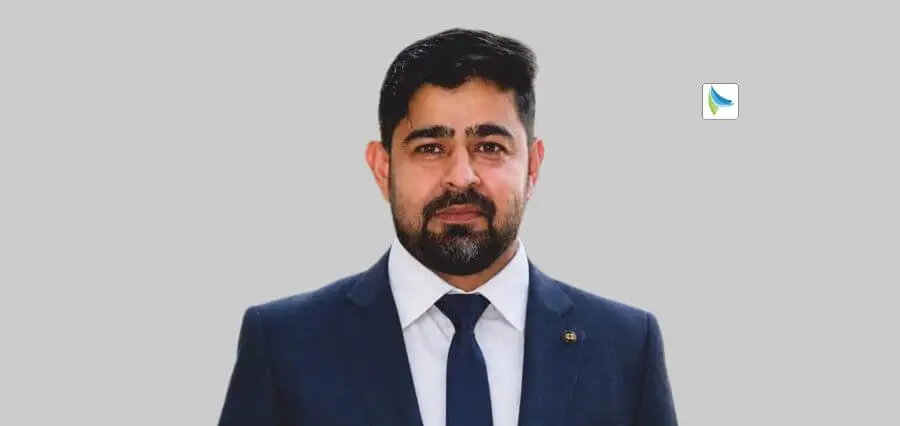




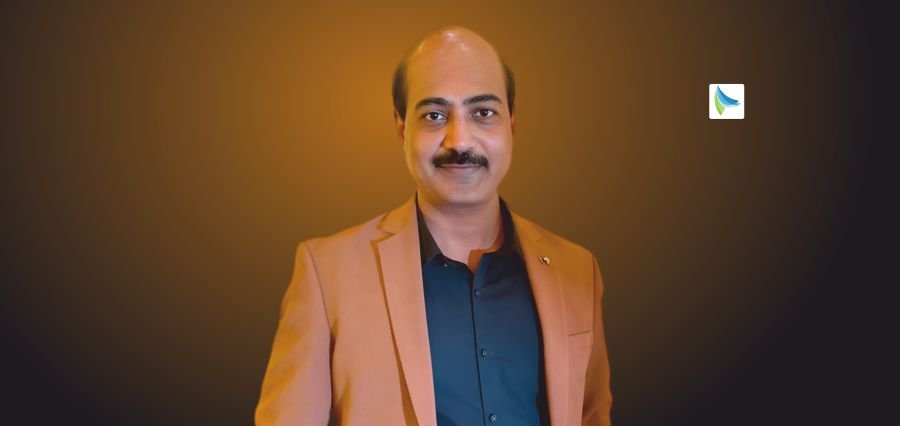
Satish Aralkar’s journey didn’t begin in a office or a gleaming boardroom — it began on the shop floor of a manufacturing plant, surrounded by the hum of machines and the determination of people who built things with their hands and hearts. It was there that he learned his most enduring lesson: true transformation is driven by people, not by technology alone.
What started as a career in manufacturing evolved into a mission — to bridge the gap between people and technology. Over the next two decades, through his experiences at global powerhouses like Tata Motors, Satyam Computers and IBM, Satish Aralkar nurtured a vision of technology that uplifts rather than overwhelms. That vision came to life with the founding of Vedarth Solutions, a company born from the belief that when technology empowers people, extraordinary things happen.
His career has taken him from running large-scale ERP initiatives in London to supporting open-source ERPNext solutions in India, reflecting both precision and purpose. He transformed his ERPNext finding into a mission: to assist Indian industries and SMEs in implementing world-class ERP capabilities without incurring prohibitive fees. Vedarth Solutions has established itself as a trusted transformation partner, creating intelligent, flexible, and human-centered ERP environments.
He is motivated by empathy, honesty, and creativity, continues to bridge the gap between people, processes, and technology. His narrative is about more than simply software development; it’s about fostering trust, discipline, and a culture in which digital transformation starts with human understanding.
The Awakening: When Technology Meets Human Reality
Every transformative leader carries a defining moment that reshapes their philosophy. For Satish Aralkar, this moment arrived during a large-scale ERP implementation for a manufacturing company. The organization had invested heavily in their ERP system, yet employees continued relying on spreadsheets and manual workarounds. The expensive technology sat underutilized while the business struggled with inefficiency.
Management initially viewed the problem through a technical lens. He took a different approach. He spent time on the shop floor, engaging directly with the people who would use the system daily. The revelation came quickly: the issue wasn’t technical capability but user adoption and trust.
“I restructured the implementation approach, focusing on training, making Quick Reference Guides in their language, simplifying processes inside ERP, and showing users how the system would make their daily work easier, not harder,” he explains. Within months, adoption levels surged dramatically. Management finally gained access to accurate, real-time data they could rely on for decision making.
This experience fundamentally altered his perspective on ERP implementations. He stopped viewing them as mere software rollouts and began treating them as change management journeys where people, processes, and technology must advance together. Today, in every project he leads, user adoption and process alignment take priority, with technology serving as the enabler rather than the driver.
The London Discovery That Changed Everything
While working with IBM in London on a telecom client’s Supplier Portal implementation, Satish Aralkar confronted a challenge that would eventually reshape his career trajectory. The project faced significant hurdles due to SAP’s high licensing costs and recurring expenses, making financial justification difficult for the client.
Seeking alternatives, he discovered ERPNext in 2017. The open-source ERP platform fascinated him with its ability to deliver robust functionality while dramatically reducing recurring costs. This discovery marked a turning point in his professional journey.
Upon returning to India, he founded Vedarth Solutions with a clear mission: helping businesses implement ERP without the burden of massive ongoing expenses. This decision continues shaping how the company delivers value to clients today, positioning open-source solutions as viable, powerful alternatives to traditional enterprise software.
Lessons from the Giants: Tata Motors, Satyam and IBM
Satish’s leadership philosophy draws deeply from his experiences at two industry giants. At Satyam, he learned agility. Projects moved rapidly, demanding quick adaptation to evolving client needs. This environment taught him the critical importance of flexibility and swift decision-making in leadership roles.
IBM provided different but equally valuable lessons. Managing large, complex ERP implementations showed him that success depended on two pillars: empowered teams and rock-solid processes. He also witnessed how integrity and long-term thinking build client trust, a value he is carrying forward today.
These experiences crystallized into three guiding principles that shape every decision at Vedarth Solutions: putting people first because technology alone never delivers success; leading with integrity and trust because relationships outlast projects; and driving innovation with purpose by balancing agility with structure to solve genuine business problems.
Reading the Future: ERP in India’s Manufacturing Landscape
Working extensively with Indian manufacturing clients has given Satish Aralkar unique insights into the trends shaping the 2025 ERP landscape. He identifies two powerful currents driving change.
First, Indian SMEs have evolved beyond simply seeking software. They now look for trusted, long-term ERP partners who can genuinely guide their transformation journeys. While cost remains a significant concern, many SMEs still treat ERP as merely a support function, using it primarily for record-keeping or compliance. He sees the real value emerging when businesses implement ERP as an enabler rather than just a reporting tool.
Second, expectations are rapidly evolving. Manufacturers are now demanding ERP systems that connect seamlessly with shop-floor machines, capture real-time data, and translate that information into profitability insights. However, a major obstacle persists which is data silos. Most Indian companies hesitate to share data across systems, resulting in nearly 89 percent of business communication still happening through PDFs and emails.
He envisions a future where ERP transcends transactions to embrace integration, connectivity, and intelligence. “When SMEs and implementation partners work together, I believe, ERP will transform from a cost burden into a genuine driver of efficiency, collaboration, and growth across India’s manufacturing and supply chain sectors,” he says.
Tackling Unique Indian Business Challenges
Leading large-scale ERP rollouts across different geographies has shown Satish Aralkar that Indian businesses face distinct challenges compared to their global counterparts.
The first challenge is mindset. Many SMEs are still viewing ERP as a cost or compliance tool rather than a strategic enabler. They often expect immediate results, but he emphasizes that ERP represents a journey of process discipline and continuous improvement. Cost sensitivity presents another challenge. Indian companies want world class ERP capabilities with minimal recurring expenses, driving increased traction for open-source and flexible solutions.
“Data silos constitute as the major challenge. Unlike global firms that integrate across suppliers, customers, and partners, many Indian businesses continue relying on emails and PDFs, hesitating to share data across systems. This limits collaboration and efficiency,” he expresses.
Vedarth Solutions addresses these challenges through a three-pronged approach: positioning itself as a trusted, long-term ERP partner rather than just an implementation vendor; designing solutions that reduce recurring costs while keeping ERP future-ready; and helping SMEs progress step by step from compliance-focused ERP to connected ERP, integrating machines, portals, and partners.
The Art of Leading Under Pressure
Managing teams of over 50 professionals within tight timeframes has taught Satish Aralkar that pressure can either break performance or bring out the best in people, depending on leadership approach.
His method rests on three pillars. Clarity of purpose ensures every team member understands not just their task but the larger impact of their work on client success. Trust and empowerment mean avoiding micromanagement. Instead, he gives teams ownership of their modules, encourages collaboration, and intervenes only when they encounter roadblocks. Energy and recognition keep morale high during high-pressure phases by celebrating milestones, appreciating efforts, and ensuring team members feel valued.
Crucially, he leads from the front, whether working late with the team, solving client escalations, or removing obstacles. When people see their leader standing beside them rather than above them, performance naturally follows. This combination of clarity, trust, and shared ownership has consistently helped his teams deliver even under the toughest deadlines.
Cultivating Innovation and Excellence
Receiving recognition like the IBM STAR Eminence and Excellence Award reinforced for Satish Aralkar that innovation and excellence don’t happen in isolation, they stem from culture.
He nurtures this culture in three ways. Encouraging curiosity means asking team members to question processes, challenge conventional methods, and suggest alternatives. Many of Vedarth’s best ideas have emerged from junior consultants noticing gaps. Creating a safe space allowing people to innovate when they feel free to experiment, viewing mistakes as learning steps rather than failures. Celebrating both outcomes and effort while recognizing that excellence encompasses discipline and commitment, not just results.
“Leading by example remains a paramount. I stay hands-on with technology, share new trends with my team, and demonstrate that continuous learning is non-negotiable. When team members see their leader pushing boundaries, they feel inspired to do the same. I aim on building a culture where innovation is natural and excellence is expected,” he says.
Essential Leadership Qualities for Digital Transformation
In India’s rapidly evolving ERP landscape, Satish Aralkar believes digital transformation projects require leadership that extends beyond technical expertise. He identifies three essential qualities.
Vision with practicality enables leaders to paint a big picture of how ERP can transform businesses while breaking it into realistic, step-by-step milestones that SMEs can adopt. Empathy and trust-building prove crucial since many Indian businesses are cost-conscious and cautious. Leaders must genuinely listen, guide patiently, and build trust as long-term partners rather than vendors. Adaptability recognizes that every client’s journey is unique, with some wanting ERP for compliance, others for shop-floor integration, and increasingly for data-driven profitability.
Above all, leaders in digital transformation must bridge the gap between people, processes, and technology. When you win against the people, he asserts, the technology follows and that’s when true transformation happens.
The Next Wave: Open-Source ERP Trends
Looking ahead, Satish Aralkar identifies three major trends in ERPNext and other open-source ERP platforms that will drive India’s next digital transformation wave.
Cost optimization through open-source solutions addressing the high cost-sensitivity of Indian SMEs. Open-source ERP like ERPNext removes heavy licensing and recurring fees, making enterprise-grade solutions accessible to smaller businesses. Integration with machines and portals meets manufacturers’ demands for real-time connectivity, ERP systems talking directly to shop-floor machines and linking seamlessly with supplier, customer, and dealer portals. This shift from record-keeping to connected intelligence represents a game changer.
Data collaboration and AI insights tackle the current reality where 89 percent of communication still occurs via PDFs and emails, creating silos. The future lies in ERP systems exchanging structured data across ecosystems, with AI delivering predictive insights on profitability, supply chain risks, and customer behavior.
Open-source ERP platforms are uniquely positioned to lead this shift because they offer flexibility, community-driven development, and rapid evolution. He believes this will empower Indian businesses to treat ERP not just as compliance software but as a genuine driver of growth and innovation.
Vedarth Solutions: Empowering Indian Enterprises
At Vedarth Solutions, Satish Aralkar and his team recognize that traditional monolithic ERPs are increasingly struggling to keep pace with modern business demands. High costs, vendor lock-in, and rigid architecture often leave organizations unable to innovate effectively.
To address these challenges, Vedarth leverages ERPNext as its core platform, reducing implementation and support costs while providing the flexibility Indian SMEs and large enterprises need to stay competitive. Building on ERPNext, Vedarth has developed innovative, customer-focused solutions including a Dealer Management System that streamlines dealer operations, improving transparency and engagement; a Supplier Portal that facilitates seamless supplier collaboration and reduces procurement bottlenecks; and Dispatch Automation that automates logistics and delivery processes, increasing efficiency and reducing errors.
“These solutions are microservice-driven, API-friendly, and designed to evolve with customers’ businesses, ensuring organizations can continuously innovate without being tied to costly upgrades or vendor ecosystems,” he says. By combining ERPNext’s cost-efficiency and flexibility with custom innovations, Vedarth Solutions empowers Indian businesses to operate smarter, respond faster, and compete globally.
Advice for the Next Generation
When asked what advice he would give young ERP professionals and entrepreneurs entering the digital transformation space, Satish’s response is characteristically focused on fundamentals: “Focus on solving real business problems, not just implementing technology.”
He emphasizes the importance of understanding customer processes deeply, embracing flexibility through open-source and modular solutions, and constantly innovating around automation, AI, and microservices. Technology, he reminds aspiring professionals, is just a tool. True value comes from making businesses faster, smarter, and more agile.
The Human Behind the Innovation
Beyond professional achievements, Satish Aralkar stays energized by exploring new technologies, reading widely on business and human behavior, and mentoring young professionals. Outside work, he enjoys travel and wellness activities, which help him gain fresh perspectives and maintain balance. These passions inspire him to lead with curiosity, empathy, and a continuous drive to innovate.
The Road Ahead
As India’s business landscape continues evolving, leaders like Satish Aralkar play a crucial role in shaping how organizations approach digital transformation. His emphasis on people-first implementation, cost-effective open-source solutions, and genuine partnership positions Vedarth Solutions as more than a technology vendor, it’s a transformation partner committed to empowering Indian enterprises.
In an era where technology changes rapidly but business fundamentals remain constant, his approach offers a blueprint for sustainable digital transformation. By bridging the gap between cutting-edge technology and human centric implementation, he demonstrates that the future of ERP lies not in expensive licenses or complex systems, but in solutions that genuinely empower businesses to grow, adapt, and thrive in an increasingly competitive global marketplace.
The journey from shop floors to boardrooms, from London to India, from SAP to ERPNext. Satish Aralkar Aralkar’s story embodies the evolution of enterprise technology itself, reminding us that the most powerful transformations happen when we put people at the center of every technological decision.